

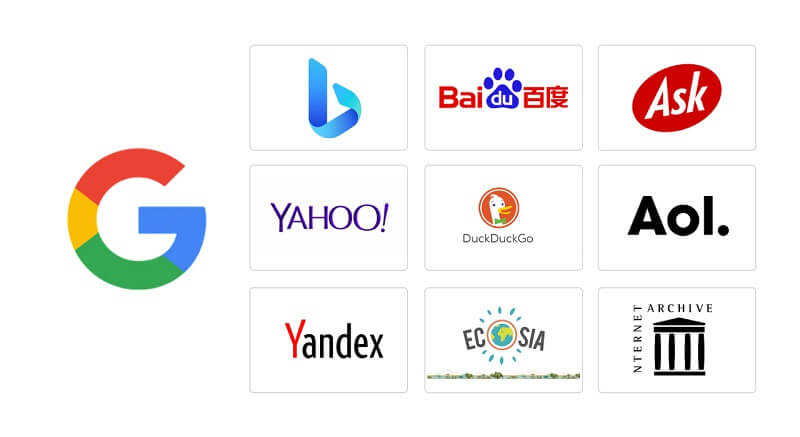
What is the best search engine for 2024? It might come as a surprise to many, but Google isn't the only search engine available online today!
Alongside Google and Bing, there are numerous other search engines that may not be well-known, yet they still provide information for millions of search queries daily.
In fact, there are many alternative search engines that fiercely compete with Google, but they currently pose no real threat to Google, which remains the most popular search engine, followed by Bing.
Best Search Engine for 2024
Here are the top search engines worth trying in 2024
1. DuckDuckGo

At first glance, DuckDuckGo.com looks similar to Google, but there are several subtle details that set this search engine apart.
DuckDuckGo offers some fantastic features, such as zero-click info, where all your answers appear on the first results page. It provides DuckDuckGo claims that help clarify the question you're asking, and most importantly, DuckDuckGo does not track your personal information or share your search habits with others.
Give DuckDuckGo.com a try. You might enjoy this clean and simple search engine.
What We Like
Does not track or store user information.
Fast searches.
Optional one-month search window.
What We Don't Like
Search results are not dated.
Image search results are limited.
No personalized results.
2. Google

Google reigns supreme in the search domain as the most widely used search engine in the world. Google is fast, convenient, and has the largest amount of information about web pages.
Try Google's image, maps, and news features; they are excellent services for pinpointing image sites, geographical trends, and headlines.
What We Like
Prefers recent content.
Ranks blogs and services.
Accessible from any device.
What We Don't Like
Collects information about users.
Hidden content can harm rankings.
Provides an overwhelming number of results.
3. Yippy
Yippy is a deep search engine that offers information not found in other search engines that use spider bots for indexing. It can often be challenging to find accurate information through traditional searches.
This is where Yippy becomes very useful; if you're looking for rare information, academic research, or similar content, Yippy is your tool.
What We Like
Blocks unwanted sites.
Search result previews.
Displays many related topics in the results.
What We Don't Like
Filtering cannot be turned off.
Supports advertising.
No intuitive search.
4. Bing

Bing is Microsoft's attempt to dethrone Google and is arguably the second most popular search engine today.
In the leftmost column, Bing tries to enhance your search by offering suggestions; it also provides search options at the top of the screen, which may include wiki suggestions, visual search, and related searches. Bing may not be able to displace Google anytime soon, but it’s definitely worth a try.
What We Like
Prefers older, established web pages.
Ranks main pages, not blogs.
Crawls both hidden and visible content equally.
What We Don't Like
Forums rank low in search results.
Instant search is slower than Google's.
Some search result screens are cluttered with ads.
5. Dogpile
Years ago, Dogpile was ahead of Google as a fast and efficient web search option, but things changed in the late 1990s, and Dogpile faded away, with Google becoming the leading platform.
However, Dogpile has made a comeback today with an increasing index and a clean, fast presentation that serves as a testament to its golden days. If you want to try a visually appealing search tool with desirable link results, definitely give Dogpile a shot.
What We Like
Pulls from multiple databases for broad results.
Fast search results.
What We Don't Like
Search result entries are not dated.
No customization for the homepage.
6. Google Scholar
Google Scholar is a specific version of its platform, focusing on serious academic and research materials that have been vetted by scholars and researchers. The content includes graduate studies, legal opinions, scientific publications, medical research reports, physics research papers, and interpretations of economics and global politics.
If you're looking for important scientific information, Google Scholar is the search engine for you to find information from high-quality sources.
What We Like
Save articles for later reading.
Citations in multiple styles.
Results include the number of citations and who cited them.
What We Don't Like
Broad but not comprehensive.
No criteria for what makes a result "scholarly."
No way to limit results.
7. Webopedia
Webopedia is one of the most useful sites on the web, serving as an encyclopedic resource dedicated to searching technology terms and computer definitions, or domain names, or what DDRAM means on your computer. Webopedia is an ideal resource for non-technical people to better understand the computers around them.
What We Like
Focuses on technical terms and applications.
User-friendly for everyday users.
What We Don't Like
Only searches the Webopedia database, which contains over 10,000 words and phrases.
Search results are not dated.
You have to open the article to learn more.
8. Yahoo
Yahoo offers several services: a search engine, news aggregator, shopping center, email service, travel guide, gaming hub, and more.
Web searching should also be about discovery and exploration, and that's what Yahoo provides; this site is helpful for internet beginners.
What We Like
The homepage includes news and trending topics.
A comprehensive store for searching and email and weather.
Options to search by sectors instead of the web.
What We Don't Like
Ads are not clearly labeled as advertisements.
Search results are not dated.
Large ads on the homepage.
9. The Internet Archive Search
The Internet Archive Search has long been a favorite


